
All Ages Concertos: Portland Bach Experience brings classical music back to the people
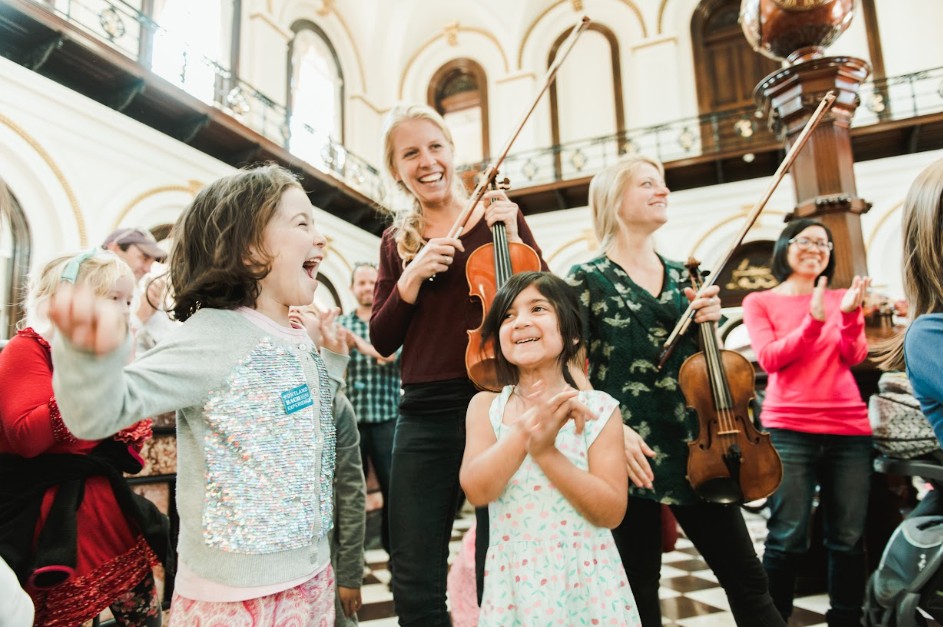
Stop me if you’ve heard this one: An underground subculture develops for the working class. People flock to beer halls and house parties to socialize, cut loose, and listen to innovative, cutting-edge music. But as its popularity grows, so does attention from outsiders. Suddenly, this music, which represented “the people,” has been co-opted by the elite, who act as gatekeepers for a culture that was built in spite of them.
No, this fable of irony isn’t just about punk or hip-hop or metal. Just a handful of centuries ago, this was the fate of classical music as well.
This inspired Dr. Emily Isaacson to bring the music of Johann Sebastian Bach, Franz Schubert, and Johann Wolfgang von Goethe back to its roots.
“All these artists were coming together and sharing their art with a lot of wine and making out,” Isaacson said, over a steaming cup of coffee at Two Fat Cats Bakery. “But then classical music became very pious and elitist and prim. So this idea that we're supposed to put all classical music on a pedestal, literally on a stage and silently revere … it is just not how the music was intended.”

Isaacson’s nonprofit organization, Classical Uprising, reimagines the classical music experience through immersive events, performances, and educational programs. Their flagship annual festival, the Portland Bach Experience, helps destigmatize the genre by hosting performances in places like bowling alleys, bars, salons, and outdoor yoga spaces.
The festival kicks off on Thursday, May 28. Over the following 11 days, Classical Uprising will present numerous innovative events. Bach & Beer presents live classical music performances at local breweries like Definitive Brewing Company and Rising Tide Brewing Co., a lecture series with musical accompaniment contextualizes the genre’s accessibility, and events like “We'll Händel the Children” expose kids to classical music’s history of rich storytelling through song and dance.
“We’re really big into puns,” Isaacson said with a wide grin.
Video courtesy of Classical Uprising
How Phish helped build Classical Uprising
Growing up in Brunswick and attending shows at the Bowdoin International Music Festival with her parents, Isaacson recognized firsthand a disconnect between the traditional live concert experience and the classical music aesthetic.
“I was 12, and you're asking me to dress up on a hot summer night at 7:30 p.m. when I'm exhausted from lacrosse camp,” Isaacson said. “Then, when something (in the music) does actually move me, I'm not allowed to do anything about it. I can't clap, I can't talk to my family about all this stuff. That just felt really ridiculous.”
But the music itself stuck with her. Eventually she pursued it as an academic discipline, earning two master’s degrees and a PhD. During her time as a student, she met her future husband, who inadvertently planted a seed of her Classical Uprising concept through an unlikely source.
“My husband loves Phish,” said Isaacson, “and so all of a sudden I'm at grad school, and also going to all these Phish concerts, and it really influenced the way that I do things now. With Phish, it's a whole experience. It's not just music, it's like 'Shakedown Street' ahead of time. I mean, it's just like it's a whole experience, and that's really what we want.”
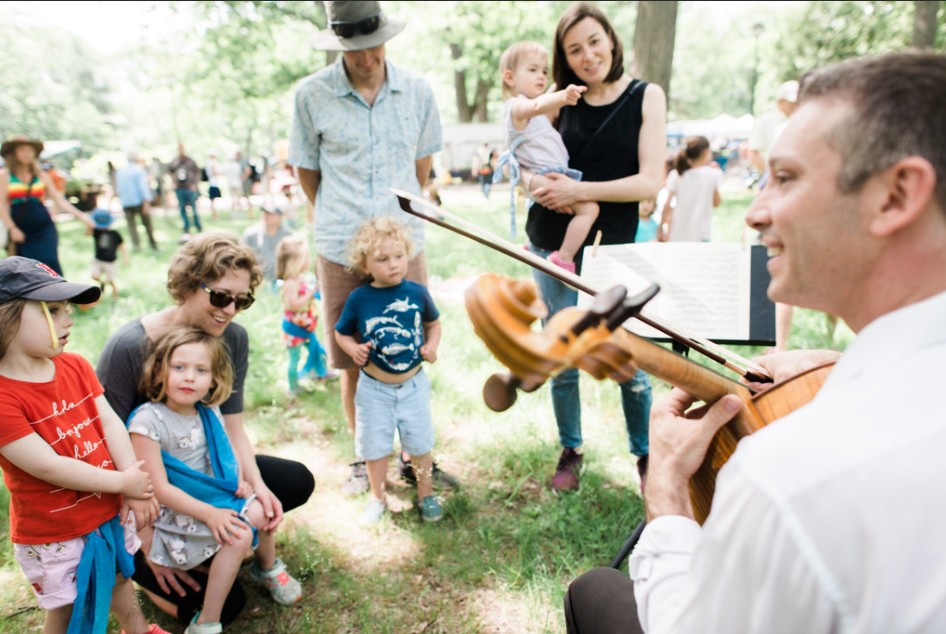
Photo courtesy of Classical Uprising
Establishing the preparatory beat
The Portland Bach Experience started back in 2017, when Isaacson worked with a Julliard professor who shared a similar concept to create a festival that helped make classical music accessible. After a few years, creative differences split the two, and Isaacson carried on to evolve the festival to its current iteration.
The approach was to host live classical music in non-traditional spaces, with past venues including Bayside Bowl, Portland Museum of Art, and Deering Oak Park. As she approached local venues to pitch the concept, she found most of the non-traditional sites were receptive to her vision.
“I've almost never had a venue say, like, ‘No, we're not interested,’” Isaacson said. “People are really excited. It's so fun to call up a new brewery and be like, ‘Hey, here's this thing that we're doing. Are you interested?’ (And the breweries say) 'That sounds awesome, we saw that on Instagram with this other brewery!”
Ironically, the most challenging venues to book were the ones that could offer a traditional classical music experience. Isaacson said the city lacks venues like black box theaters and multimedia spaces to support certain amenities on her wish list, like projection screens, visual effects, and even accessible bathrooms.
“We have a big problem with venues in this city,” she said.
Go to coda
One of the newest additions to the 2026 Portland Bach Experience is Penelope. Composed by Sarah Kirkland Snider with lyricist Ellen McLaughlin, the performance is inspired by Homer’s Odyssey. Penelope tells the story of a woman’s husband returning home after 20 years, during which he suffered brain damage from an unnamed war. To help him find himself again, the woman reads from the epic poem. As she recounts the literary journey to her husband, she finds herself inside his memory, navigating a treacherous journey to bring back his identity.
Isaacson said the genre-defying spirit of the composition breaks down barriers with audiences new to classical music. To bridge the gap between the classical music “elite” and the modern-day concert goer, Penelope incorporates electric guitar, full drum sets, and pop-music structures.
“I often compare it to the storytelling of Joni Mitchell with the musical layering of Sufjan Stevens or Arcade Fire,” said Isaacson.
But for the curious listener looking for an approachable introduction to classical music, Portland Bach Experience also runs performances of the Brandenburg Concertos by Bach, which Isaacson said is her go-to recommendation.
“We do a Brandenburg Concerto every year at the Portland Bach Experience because it is some of the best Baroque music out there, and because it's a great introduction,” she said. “If you don't know any classical music, I call (the concertos) a ‘gateway drug.’ You really can't help but like dancing or moving or jamming. It's such exciting music.”
A gateway drug may be a controversial metaphor, Isaacson adds, but it’s apropos for the vision of the Portland Bach Experience: bringing this once-underground subculture back to its humble, informal beginnings.
The Portland Bach Experience takes place between Thursday, May 28, and Sunday, June 7. Tickets and event schedules are available on their website. Learn more at https://www.portlandbachexperience.com/.