
Not afraid to suck: The (very) early story of Lolabelle
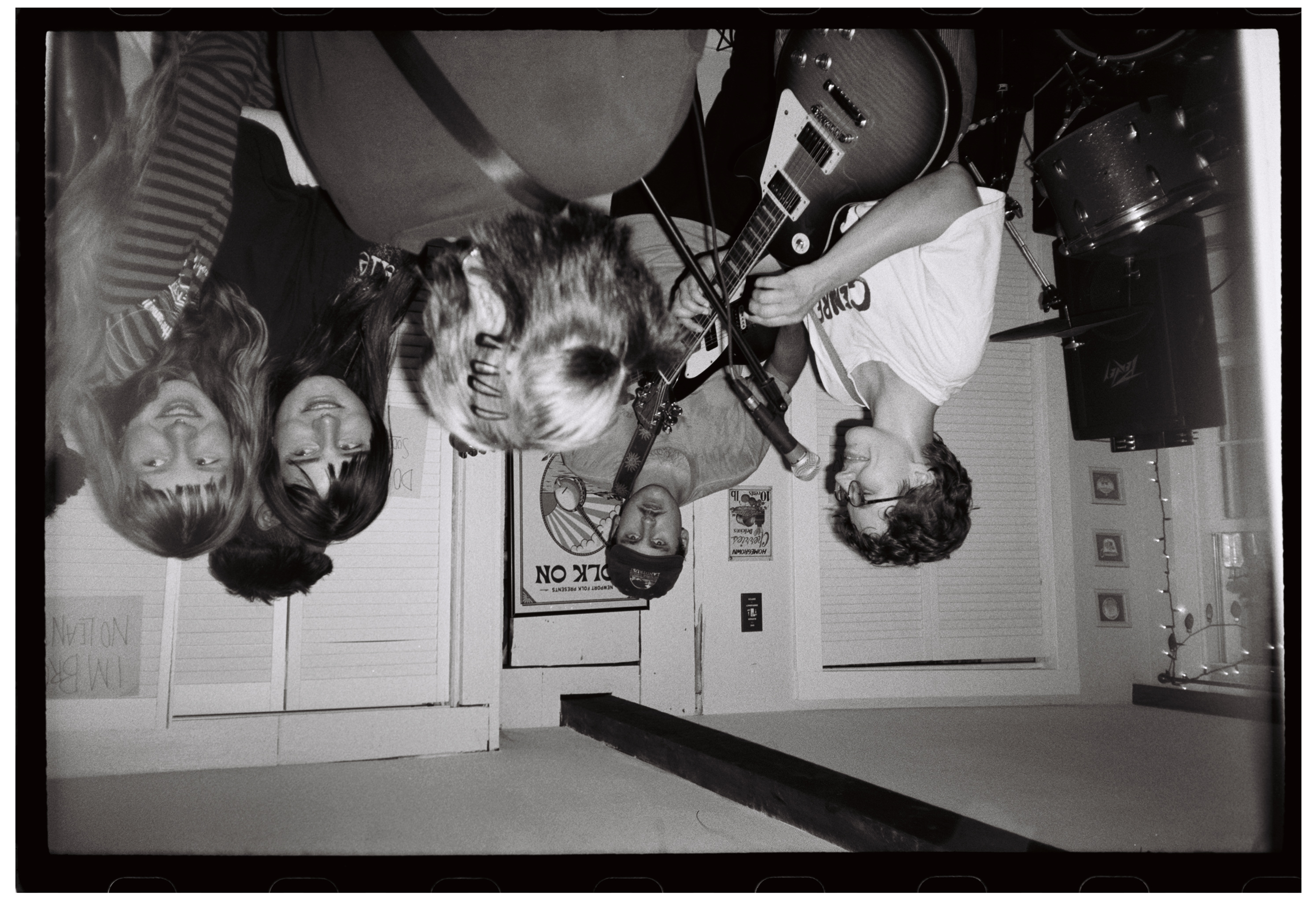
Photo courtesy of Lolabelle
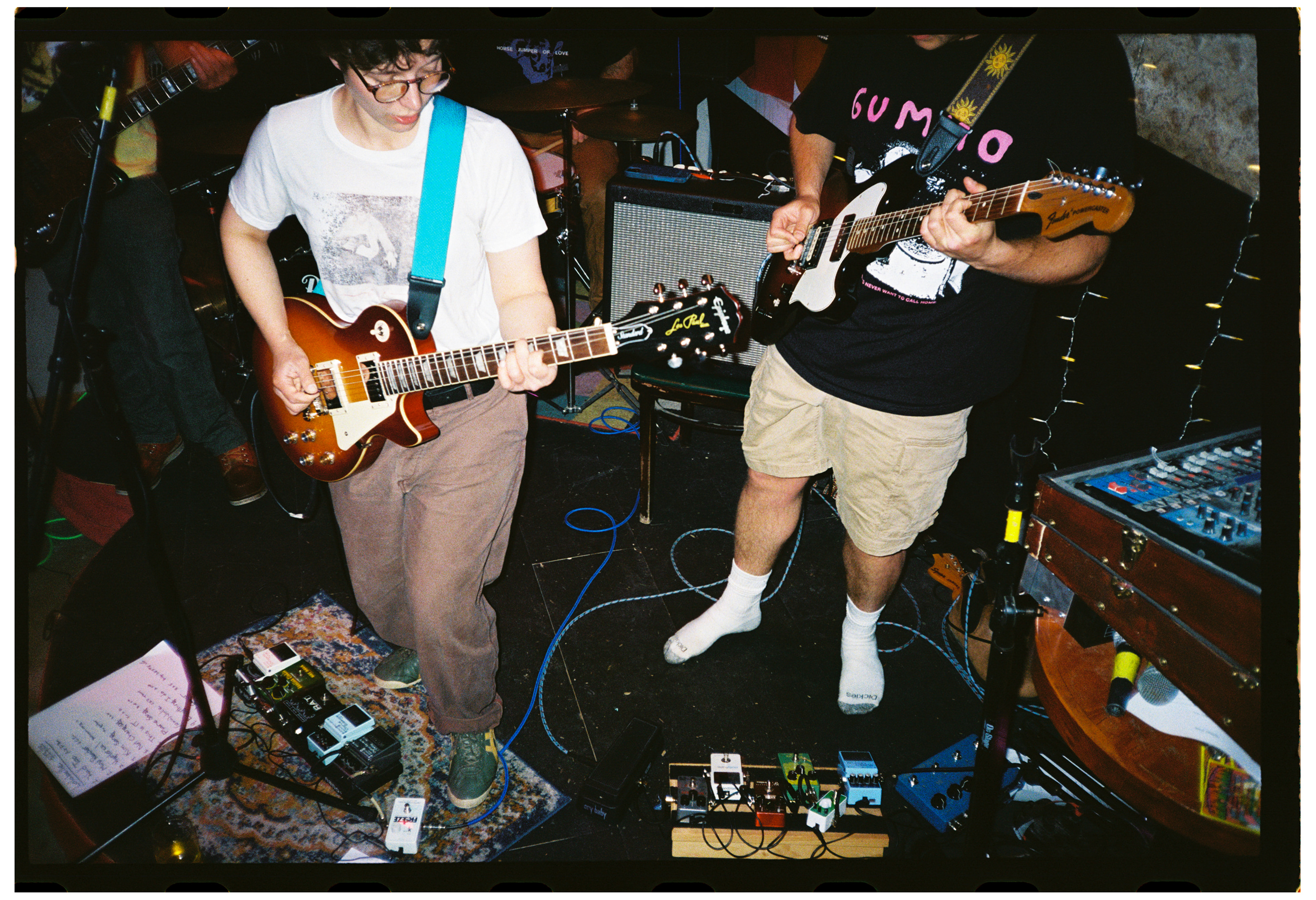
As one of the five recipients of One Longfellow Square’s Longfellow Emerging Artist Fellowship (LEAF) program, Lolabelle was, undoubtedly, the noisiest band on the roster. But despite their misfit status compared to the gentler bands that grace the OLS stage, the foursome fueled their brand of punk energy with a secret gift of the program: pragmatism.
Their debut EP, “Sugarbowl,” blends aughts-era indie rock with grunge and shoegaze. Lead singer Caroline Homer reinvents her classically trained opera singing style for a harder, heart-on-her-sleeve vocal delivery. With a few rocker dudes rounding out the rhythm section, Lolabelle blends underground music in a way that is refreshing in a genre that was dragged kicking and screaming into experimentalism.
Maine Coast Life caught up with three of the four band members to chat about the LEAF program, Caroline Homer’s opera background, starting a punk band in Portland’s DIY scene, and why you have to “be bad very publicly” in order to create art.
*

Maine Coast Life: One of the reasons that I had reached out is because I know that you are one of the five artists who received the LEAF Scholarship from One Longfellow Square. So I was really interested in how you guys got involved with that and what your journey was. How did you get introduced to the scholarship?
Caroline Homer (vocals/guitar): I heard of it through a friend who basically sent it to me and knew that I was starting to play guitar and starting to write songs and kind of had this fledgling band. And this friend sent it to me and was like, "You should apply." And I took a quick look and I was like, "Yeah, right. Like, we're an indie rock band." And like, you know, this beautiful venue [One Longfellow Square] that kind of has this focus on, you know, a lot of quieter, folk-oriented music and it’s a listening room. And we're kind of like a turn-the-volume-up-to-10 type of band.
So it came onto my radar. And at that point I was like, okay, fine, I'll just apply. Like, you know. And the application was actually really fun to fill out. … There were all these questions asking about our role in our music community and how we would pay it forward if we were chosen for this opportunity. And I just had such a nice time thinking about all these people I had met and this incredible little ecosystem that's in the Portland area.
Gene Gill (drums): And she told us she filled this thing out and we're like, “Okay, great. Yeah. It's not gonna work for us.” And then, to her credit, and to OLS's credit, they saw something in that application.
We were a new band. Nothing recorded, only a year's worth of gigs under our belts. And we've never sort of done that thing before. So a lot of these experiences are new to us.
MCL: Yeah, and you guys had touched on something earlier where … you were a little outside of what the traditional performers at One Longfellow Square are. And Emily Read [executive director of OLS] had actually mentioned that as well. A lot of their submissions came from singer-songwriter, folk, that sort of realm. So I found it really fascinating that you guys had a different dimension. Had you ever played One Longfellow Square before?
Gill: We lived right near it. I haven't played there but I've seen so many musicians there I love. I’ve seen The Bad Plus there a couple of times. A lot of musicians in, sort of, the acoustic music orbit, bluegrass, fiddle tunes, I'm really into that. So it's sort of like that part of my musical life. I was already really familiar with that room and, you know, now we're putting it together with this rock band and you know.
MCL: When you submitted, what was the number one thing that you were thinking that you were hoping to get out of this program?
Homer: My biggest goal was to have the money to be able to record. We had been saving up from some gigs here and there, but recording is extremely, extremely expensive. We had about an hour's worth of original material and we had been playing it around and it felt good and we had really tightened up these arrangements, but we just didn't have the infrastructure or the resources to actually put it out there and record it.
And I realize that there's kind of like a huge deficit in the DIY world. Everyone just wants to act like you're underground and then one day you just blow up and it's like … you know, we all know in 2026 that none of that is real, but that story is kind of like romanticized and really enticing and it takes a lot of work so it's been cool to be taught these things that would normally take many many years of trial and error to learn.
MCL: So, it's been eight months into the program. What would you guys say has been the biggest benefit from the LEAF Scholarship?
Homer: We would not have the EP [“Sugarbowl”] out if it were not for that money. We were able to go to Acadia Recording studio and what Jason [Phelps, studio owner] over at Acadia was able to do was really bring it in terms of sound quality. It's the incredible skill set — the audio engineering, the mixing, the mastering — and that's just completely inaccessible without the capital.
MCL: I want to backtrack and get to how you started as a band. Caroline, you have a very unique story with the fact that you went to SUNY Purchase for Opera Studies. But studying opera became detrimental to your mental health after a while. I was curious how you got started in the opera space and if you could share anything about the experience that really kind of turned you off from that realm.
Homer: There are so many good things I can say about that time, too. For all the bad things, there were also good things, and it's the reason why I'm still a musician now. [Music school is] kind of like boot camp in a way. When people look back and they're like, “That was the worst time in my life.” But I operate in a fundamentally different way now, like I've developed a certain type of skill.
I did a lot of musical theater, and I sang in a lot of choirs and actually a lot of intergenerational choirs, which was really cool. I was also a moody teenager who had my headphones on on the bus and I was listening to Elliot Smith and listening to those old Death Cab for Cutie albums and The Strokes. So I kind of had, like, two sides going on where I really loved mid-2000s indie rock. And then at the same time I was like this classical music nerd.
So when it was time to go to college, it just made sense. I want to be an opera singer and I want to do it right. I want to go to this really intense conservatory. But towards the end of my school years, it was also just a really intense time. Really busy all the time, quite competitive. Maybe some professors who were sort of … stuck in an older model of thinking. They were trying to prepare us for a world that they perceived … as you have to look a certain way, you have to act a certain way, women don't cut your hair, wear this outfit, blah blah blah. And it was just pretty overwhelming.
I do feel like the classical music world has made some strides since then, but I was just kind of looking around and I was like, God, I love this music and I connect to it so much, but it just sort of hit a point where I realized like, you know, this will break me if I keep doing it, so I have to step away.
MCL: Tell me a little bit about some of your earliest shows? How did you guys start putting the band together, and what was the scene like in West Buxton?
Homer: Well, at the time that we started the band, we actually lived in Portland. So we ... have known each other a really long time and then we met Kurt a little later. We were all living together in Portland.
Gills: This out-of-state landlord had bought this place while we were living there, and we didn't hear from him at all. And there was just like a sign on the basement [door] that was like, “Don't go in here." It was locked, but then when it got sold, the padlock came off and we … cleaned up the basement a little bit. We started storing stuff down there. We set up a dark room down there for photo developing. But then we set up a little rehearsal space down there, and it was dusty and gross. But it was like cobwebs, dirt floor from a lot of it. We put the rugs over the dirt to keep the dirt down.
Yeah, I guess [Caroline] booked a gig at The Aphodian and we had it up on Bandcamp for a while. We took it down because it's terribly embarrassing.
MCL: So you guys did a live recording over at The Aphodian Theater?
Homer: It was on like a Zoom recorder. It wasn't anything special. It was in the back of the room. Like, it sounds so bad to me now. So bad that it's scrubbed from the internet. But at the moment, I was so proud of this because it was these songs that had been knocking around in my head for a while, that I was, like, playing in my bedroom with the unplugged electric guitar or a box fan on, hoping no one hears me, you know. So it just felt like this huge growth.
I was going to shows, and I was watching people, and I was so jealous. I wanna be up there, I wanna be playing guitar really loud, that's all that I want. And I realized I just have to be bad in a public way for a little bit. And then keep working, and it will catch up. And it was so different from my kind of opera training of being very polished, being very professional. So even though those recordings sound really bad, I was super proud that I had made something, you know? My own words, my own art.
Kurt Fedora (bass): I've always said you just can't be afraid to suck.
*
Lolabelle will play an EP release show at SPACE Gallery in Portland on Thursday, Aug. 6. Opening acts include Freak Phone and Pond 1000. Tickets available at the SPACE website.