
Sierra Hull needs music to feel complete
Written by Chris Hislop
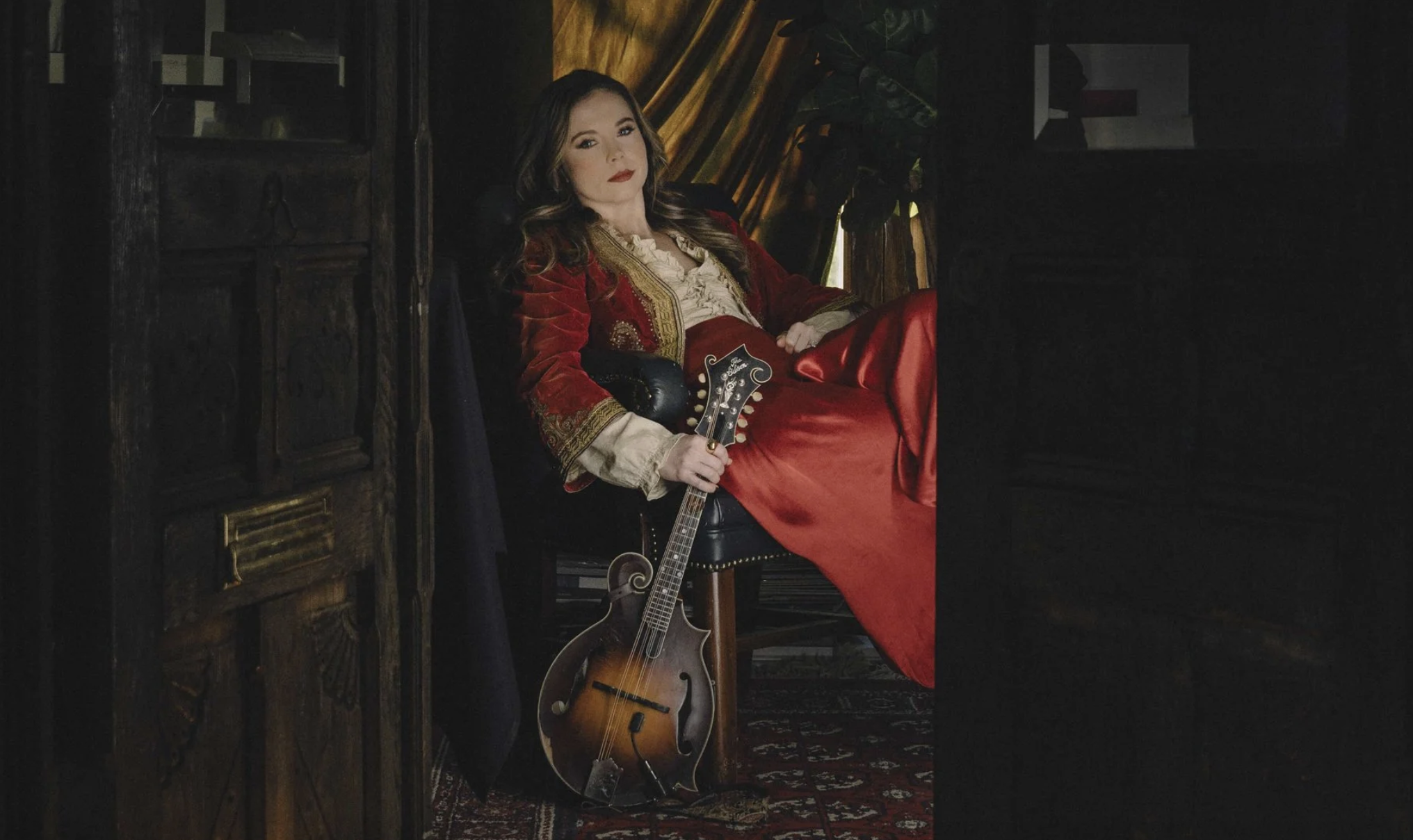
Mandolin maestro Sierra Hull returned to Portland on Friday, Sept. 18, for a show at State Theatre. In advance of her performance, she spoke with Maine Coast Life about her obsession with traditional music and how she tests the bounds of such… traditions. She also delved into what keeps her coming back to visit us here in Vacationland. Spoiler alert: It isn’t all about the lobster.
*
Maine Coast Life: Why music? Why do you seek it? Why do you create it?
Sierra Hull: Music has always been a part of my life for as long as I can remember. I’d be playing music even if I wasn’t doing it on a stage because I need it in my life to feel complete. It’s my outlet for expression and an escape from the rest of the world for me. I also love the community that I get to be a part of. It’s the best gift to have so many folks to love and be friends with through music!
Let’s talk about your latest record, “The Movements.” This project bridges through-composed arrangements and bluegrass improvisation. It’s pretty ambitious, and pretty cool if I do say so myself. How did writing a formal three-part concerto shift the way you approach spontaneous composition during live shows with this core band?
Part of what I wanted to bridge in the writing of this piece was leaning into some formal compositional elements that you’d have in a classical concerto — interesting counterpoints and through-composed melodies. But the idea of a “bluegrass” concerto, to me, felt like an opportunity to allow for sections that we could improvise on night after night in a live setting too. It was fun having the freedom to not necessarily feel like it had to be one particular thing.

Having performed “Movement 3” live for a few years before officially releasing the recorded project, how did the audience's response shape the final studio arrangement?
We actually had already recorded the full concerto shortly after writing and premiering it a few years ago. It was recorded around the same time that we recorded the final songs for “A Tip Toe High Wire,” but we held it in the wings to make sure that it could have a proper release. The studio version is really interesting for us to listen back to now because it is a true reflection of how it sounded in the earliest stage of working up the whole thing.
Transitioning from the raw, acoustic space of “Weighted Mind” to the expansive sounds of “A Tip Toe High Wire” and “The Movements,” how do you decide when a song demands bare-bones space versus complex, layered instrumentation?
There was an album in between that I made called “25 Trips” that really felt like a bridge between the sparseness of “Weighted Mind” and what eventually led to “A Tip Toe High Wire” and “The Movements.” I learned so much from stripping everything away and making such an exposed album like “Weighted Mind.” It allowed the songwriter in me to really have room to step out and say what I felt was most important to me as a lyricist at the time, but also demanded that I step up to the plate musically and find a way to accompany myself with very little instrumentation around me. When I started building back in more instrumentation, I tried to not lose sight of those things that I had learned from that previous album. Now with the touring band having been a big part of these last two releases, it’s been an opportunity to have other amazing voices shine through and workshop things as we go in a live setting. There’s a lot of trust and understanding of what folks bring to the table, which allows me to sometimes write with their musical voices in mind.
You’re playing the State Theatre in Portland, Maine, on Sept. 18 — a venue known for its deep acoustic character. How do historic theater spaces like this affect the dynamic headroom and dynamic range between your mandolin and the rest of the ensemble?
We played a show at State Theatre for the first time in 2024 and loved the room. It’s such a great energy from the audience in rooms like that one. I was also lucky enough to play last December with Béla Fleck and the Flecktones on their Christmas tour stop and just had the best time. We are grateful to be coming back for another show of our own!
Your touring band — Avery Merritt, Erik Coveney, Mark Raudabaugh, and Shaun Richardson — has developed an incredible telepathy on stage. What is a specific signal or subtle cue you all use on stage when you decide to stretch a solo past its typical framework?
Sometimes it’s as simple as a look or nod to cue the end of an extended solo. Sometimes there are set lengths with a general, but very open plan for how to build something, so we are just listening as intently as we can to play around the soloist. These guys are so great with all the little details and remembering complex arrangements of my more through-composed songs. Being able to have those strengths from all of them allows a lot of freedom to play a wide range of things from night to night. They are so talented, and I’m really lucky to get to have them on tour!
You’ve collaborated with absolute masters of the instrument like Béla Fleck and Chris Thile. What is one specific lesson on musical leadership or rehearsal discipline from those collaborations that you carry into leading your own band?
Béla and Chris are both so dedicated to their craft. They seem to have no limits to their musical creativity and output. It’s really special to see that up close and certainly inspires me to keep digging deep within myself for whatever I may have to offer. I think the key for me has been to surround myself with like-minded people who enjoy the push and long to grow as much as I do. We are always searching for ways to make the music and the show as good as it can be, and that requires a lot of discipline and time spent off stage doing the work. But we love the work!
As a multi-time IBMA Mandolin Player of the Year, your technical proficiency is undeniable. When you hit a creative plateau or routine in your daily practice, what exercises or non-bluegrass genres do you turn to to reset your hands and mind?
Creativity can come in so many forms! Sometimes laying down the instrument and diving into a great book, podcast, or show can be just the ticket. I love to take long walks and be out in nature. I’ve recently gotten into running, and it’s such a great way to just clear the mind and remind myself that I am capable of hard things. I listen to all kinds of music, so there’s never a shortage of things to be inspired by there, but I do find that sometimes because I’m always living a musical life, I need a break from that and go seeking inspiration in other things by just living outside of the musical space for a bit.
Mandolin tone can vary dramatically depending on room temperature, acoustic environment, and pick choice. What tonal qualities are you chasing in your physical setup when performing live versus recording in the studio?
Funny enough, I hardly ever touch the setup on my mandolin. I tend to go with the flow and try to adapt to the various elements around me. I have a great mandolin that holds up well with all the crazy travel and changes that I throw at it, thankfully. I think the main thing is learning to trust the ears and adjust as needed. Sometimes that can mean playing harder or softer, but really I try not to overthink it and just trust my hands and ears to do the adjustment in real time! Getting too consumed with that stuff kinda takes me out of the music, to be honest, and that’s really where I wanna be most present.
Having entered the industry at a young age and consistently pushed genre boundaries, how do you balance preserving traditional bluegrass roots with making space for progressive, genre-defying arrangements?
I’m so thankful that I grew up so immersed in the traditional scene. I really cut my teeth sitting in circles with older musicians who showed me the old tunes and songs that we all love and hold dear. I’m never really trying to preserve tradition or push it forward, but if I listen to the deepest parts of myself and try to be genuine to what I love… the love of traditional music is just such a part of me that I will always have that in whatever I do, and I will hopefully always be a curious musician and want to continue to grow.
Looking across the setlist for this tour, which song feels the most challenging or satisfying to deliver live right now, and why?
As far as instrumental things… "The Movements" are always a great challenge to execute well. As many years and times as I’ve played my tune “Bombshell,” it’s always still a physically demanding one to really nail! Some vocal songs can be hard depending on what crazy thing I may be trying to play while singing at the same time. I’ve learned I kinda have to split my brain into two things and just trust the mandolin parts to be there so I can just relax and sing.
When you’re visiting a place like Maine, is there any sort of regional offering that you just have to have while you’re visiting? Pre- or post-show?
I love coming to Maine. I’m always looking for all things blueberry and a good lobster roll! The weather and the beauty this time of year in Maine are particularly dreamy!
*
For more information on the show, visit www.statetheatreportland.com.